English
 Български
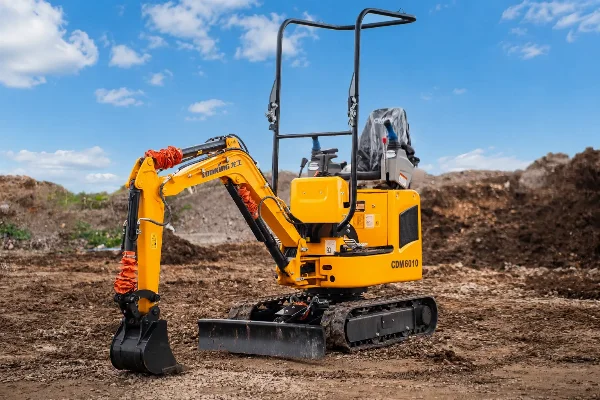
Lonking CDM6010 is a 1010 kg mini excavator with 0.022 m³ bucket, 320 mm standard bucket width and 7.2 kW Yanmar Stage V engi...
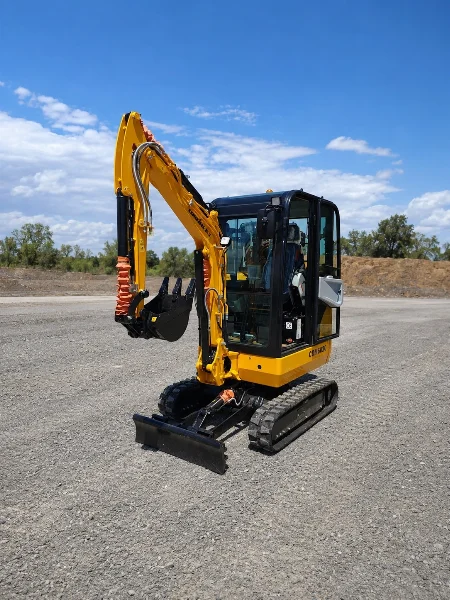
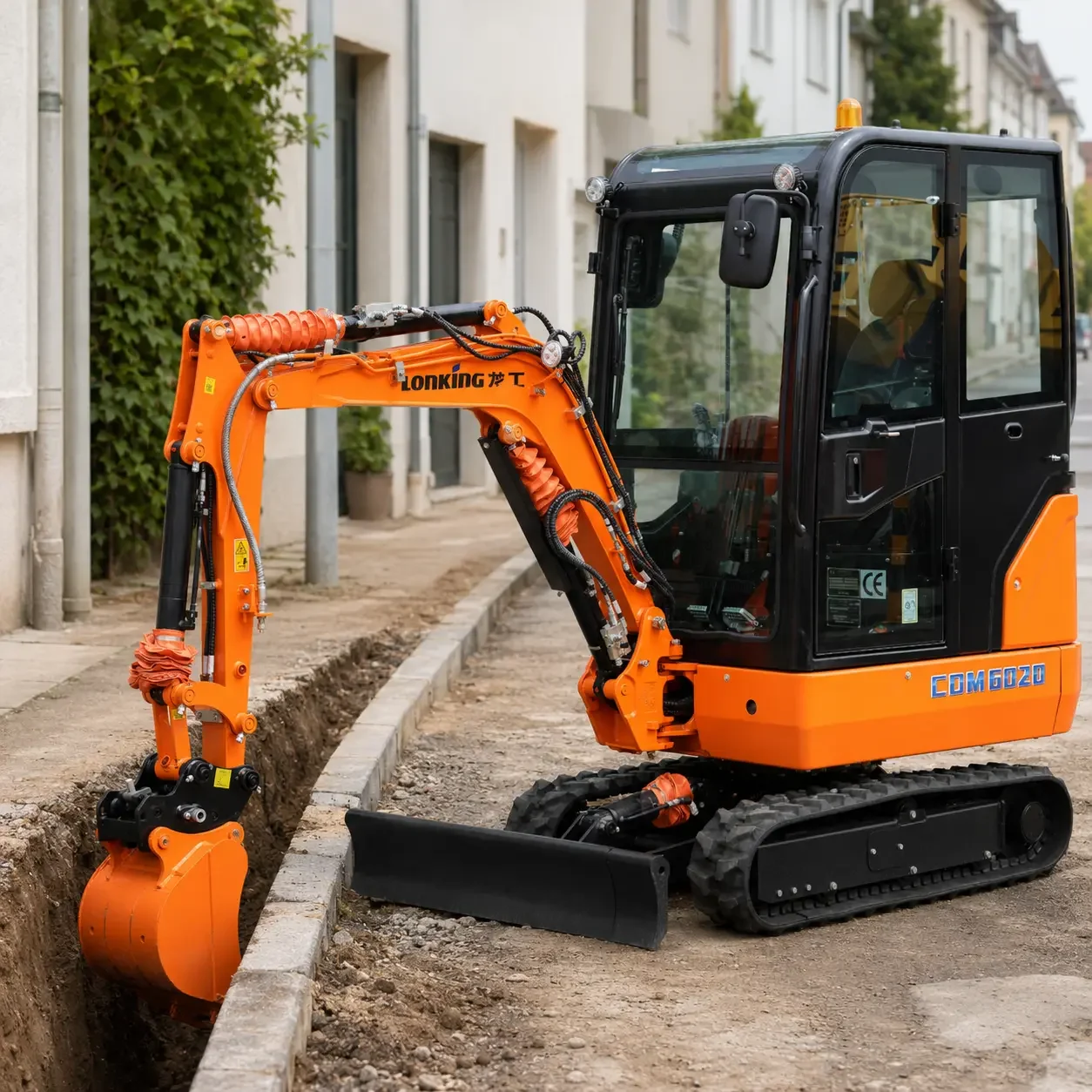
Lonking CDM6020 is a 2000 kg mini excavator with 0.04 m³ bucket, 380 mm standard bucket width and 13.4 kW Yanmar Stage V engi...
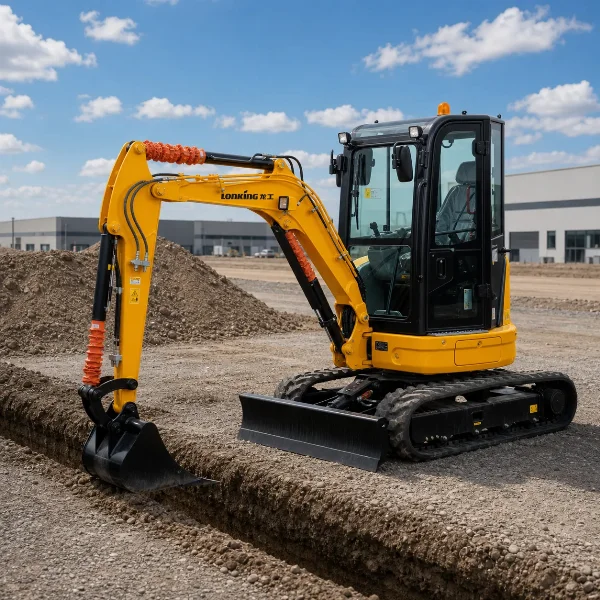
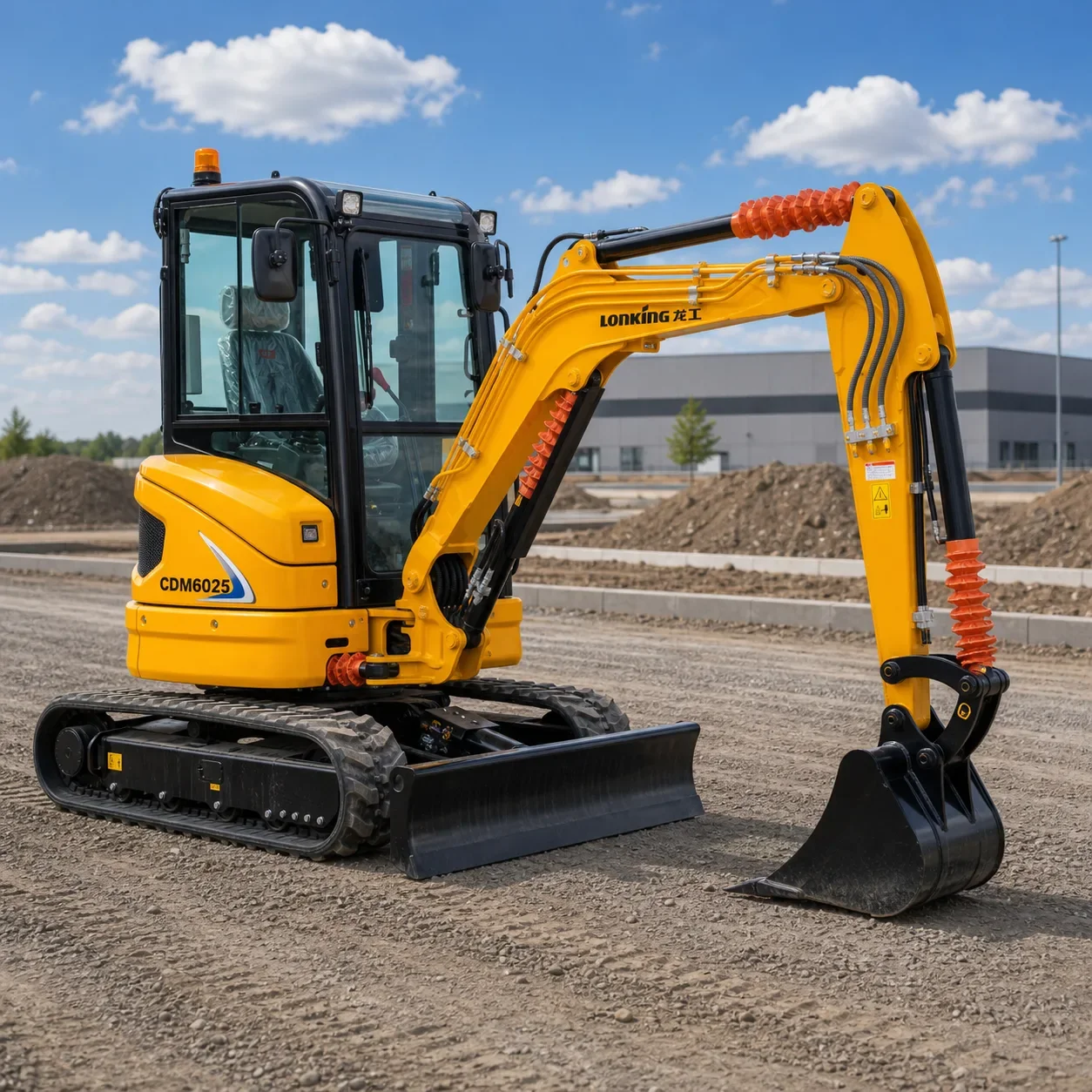
Lonking CDM6025 is a 2650 kg mini excavator with 0.08 m³ bucket, 580 mm standard bucket width and 14.6 kW Yanmar Stage V engi...
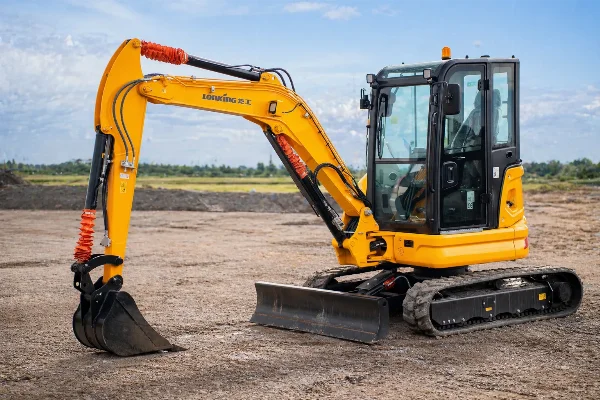
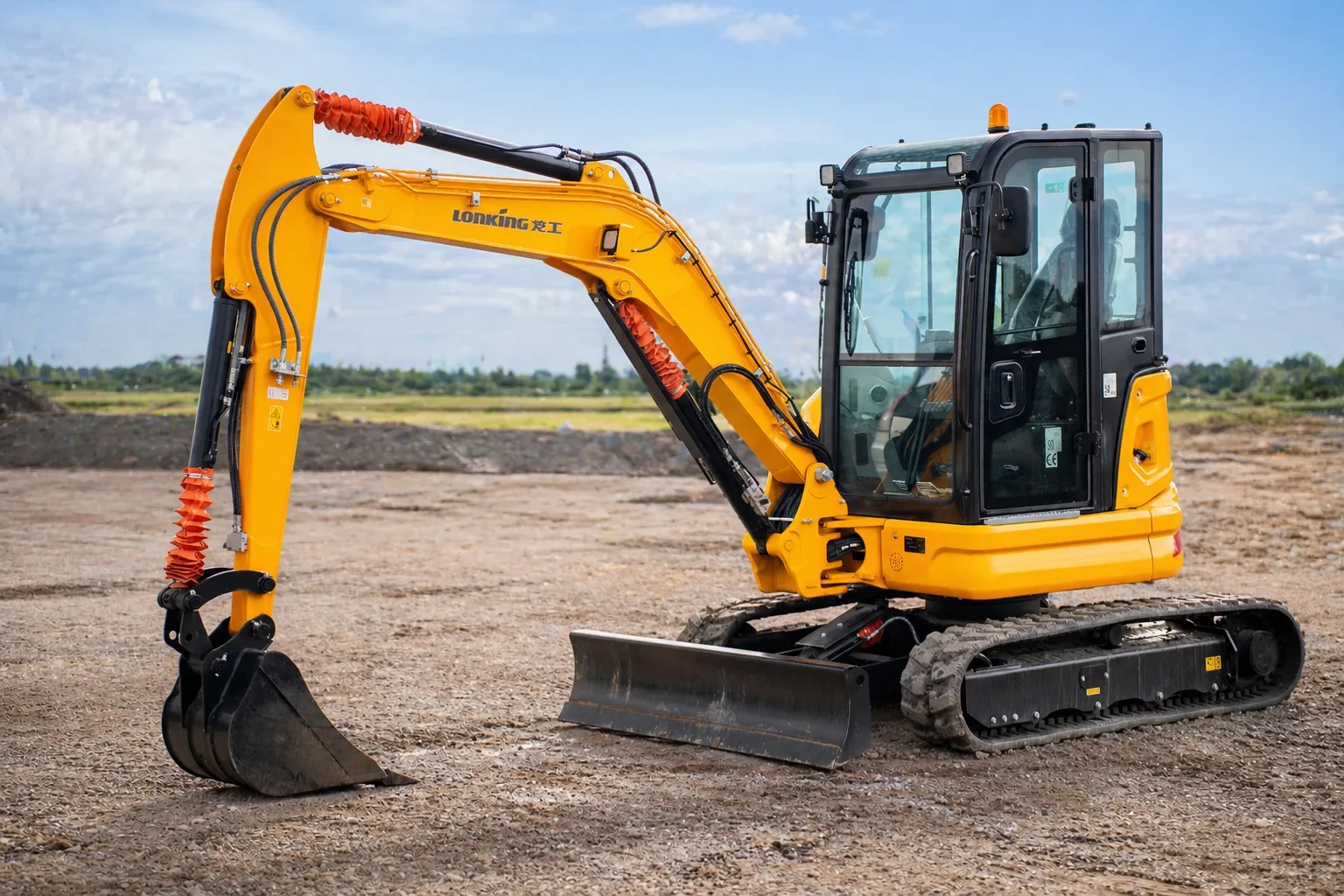
Lonking CDM6035 is a 3850 kg mini excavator with 0.11 m³ bucket, 520 mm standard bucket width and 18.2 kW Kubota Stage V engi...
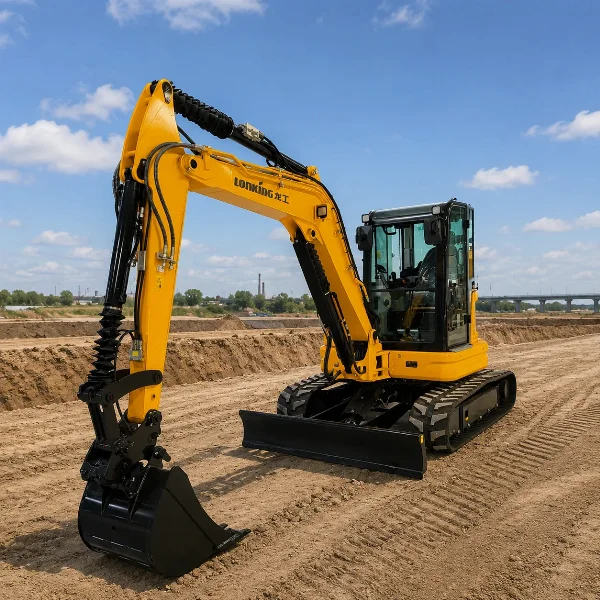
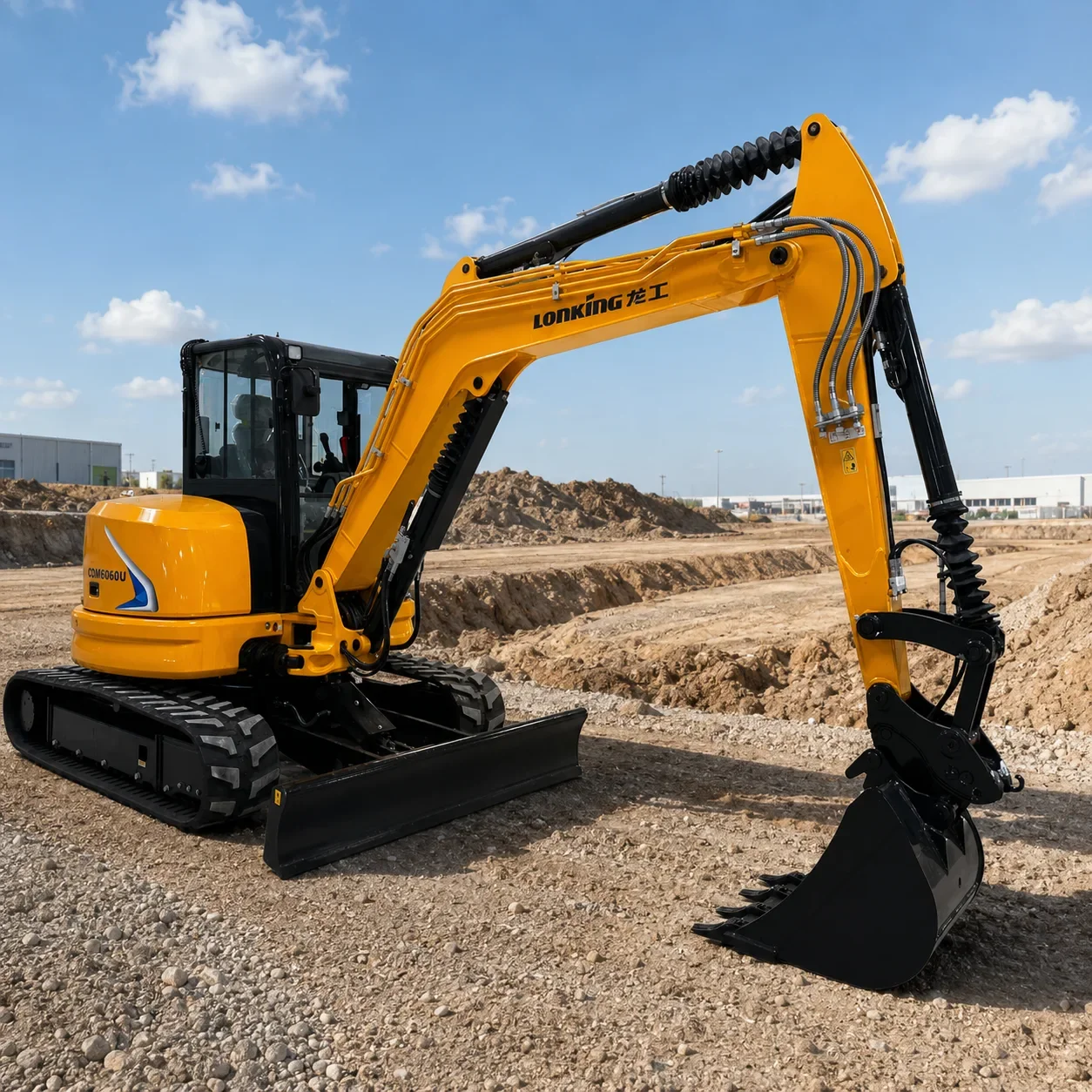
Lonking CDM6060 is a 6050 kg mini excavator with 0.25 m³ bucket, 42.4 kW Yanmar Stage V engine and 144 L/min hydraulic flow....
Mini Excavators for Construction and Digging – Compact Machines for Tight Spaces
Mini excavators are practical machines for contractors who work in tight urban sites, private yards, renovations, utility repairs and smaller construction projects. In these conditions, larger excavators are often difficult to transport, hard to position or risky to operate near finished surfaces, buildings, fences and existing infrastructure.
The right compact excavator can reduce manual labor, improve daily productivity and make precise digging easier in restricted spaces. BAUTRAX supplies a selected range of Lonking CDM mini excavators from 1 to 6 tons with Yanmar and Kubota engines. This guide helps you compare the models by access width, operating weight, digging needs, transport limits, tail swing, attachment use and typical jobsite conditions.
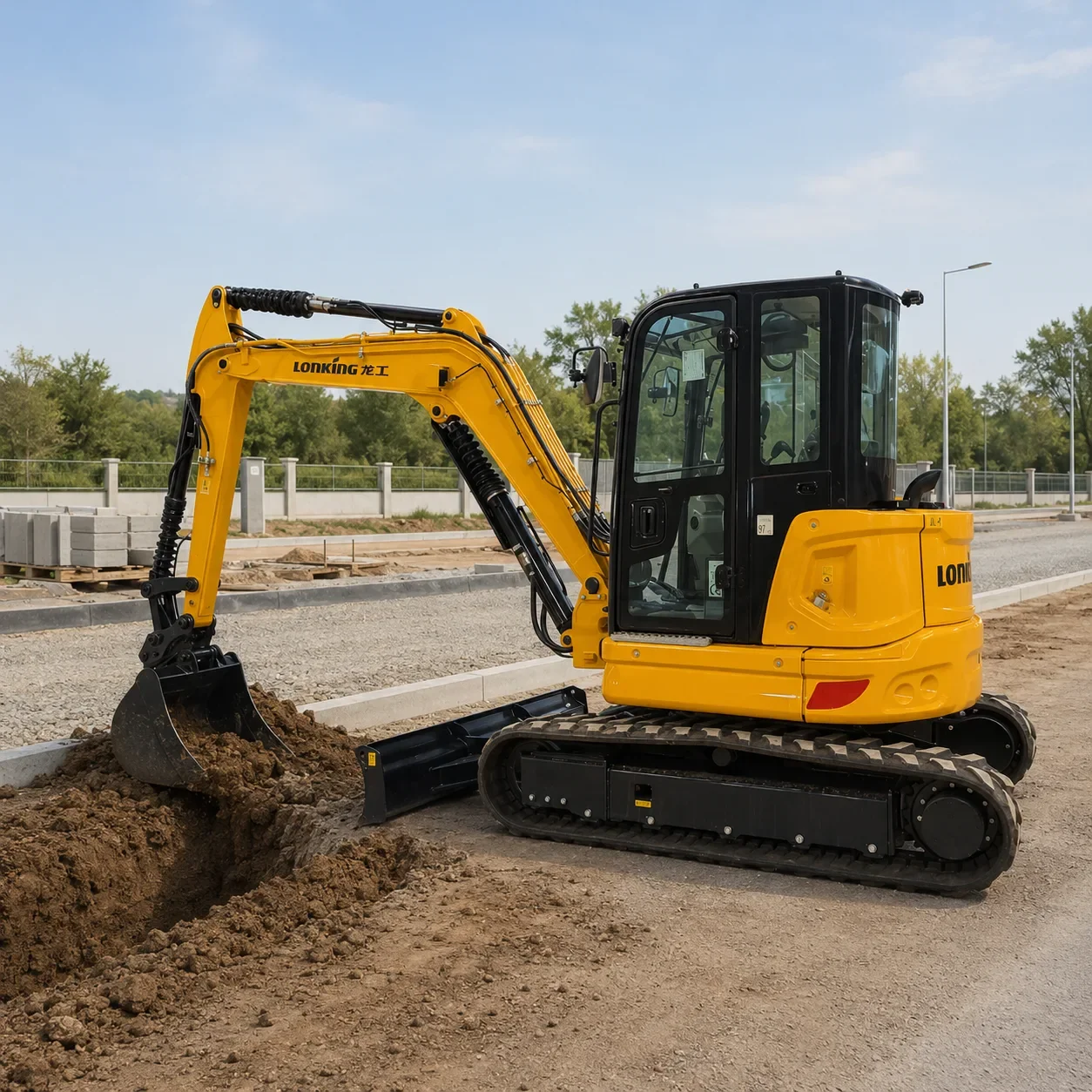
How to choose the right mini excavator
Before comparing models, check the main jobsite factors that affect machine size, transport, productivity and attachment compatibility.
Access width
Measure the narrowest gate, path, ramp or entrance the machine must pass through.
Digging depth
Match the model to the required trench depth, reach and soil conditions.
Transport weight
Check operating weight against your trailer, truck, ramps and transport limits.
Tail swing
Important when working close to walls, fences, buildings, vehicles or roads.
Attachments
Confirm hydraulic compatibility for hammers, augers, grading buckets or quick couplers.
Daily workload
Choose by working hours, soil difficulty and required daily productivity
Buying Guide: How to Choose a Mini Excavator
Choosing a mini excavator only by engine power or operating weight is not enough. A smaller machine may be more profitable if it can reach jobsites that a larger machine cannot enter. A heavier machine may be more efficient when it stays on site and works longer hours. The suitable model depends on the type of work you do most often, the access limits you face and the way you transport equipment between jobs
1. Access Width and Site Restrictions
Start by measuring the narrowest point the machine must pass through. This includes gates, paths, ramps, doorways, turning areas and finished surfaces that must not be damaged. Many restricted jobsites are limited not only by width, but also by turning space, overhead clearance, soft ground or narrow road access.
For very tight residential gardens, courtyards, renovation sites and indoor work, the 1–2 ton class is usually more practical. Models such as CDM6010 and CDM6020 are easier to move, position and transport. They are suitable when compact size matters more than maximum digging force.
For general urban and suburban contractor work, the 2.5–3.8 ton class usually gives a better working balance. Models such as CDM6025 and CDM6035 offer more stability, better digging performance and higher productivity while still remaining compact enough for many restricted jobsites.
The 6-ton class requires more planning and space, but it becomes useful when access is acceptable and the work requires higher output.
2. Digging Depth, Reach and Daily Workload
The required digging depth is one of the most important technical factors. A machine may fit through the gate, but still be too small for the trench depth, reach or soil conditions required on the job.
Smaller models are useful for shallow trenches, landscaping, light utility work and jobs where the machine only works for part of the day. They are easier to transport and operate in tight spaces, but they are not intended for high-volume excavation.
Mid-size models such as CDM6025 and CDM6035 are more suitable for daily contractor work. They are a practical fit for drainage, cable routes, small foundations, utility repairs and general digging where the machine needs enough stability and reach to work efficiently.
CDM6060 is the stronger option when the site requires deeper trenches, heavier soil handling, longer working days or higher daily output. It is less compact than the smaller models, but the higher capacity can save time when the job volume is larger.
3. Tail Swing and Working Near Obstacles
Tail swing matters when the excavator works close to buildings, fences, walls, parked vehicles, sidewalks, roads or existing utilities. In many Bulgarian urban and residential sites, the machine does not have open space around it. This makes compact rear movement and good operator visibility important.
Zero-tail or reduced-tail designs help reduce the risk of hitting objects behind the machine when the upper structure rotates. This is especially useful in city work, private yards and renovation projects where damage to surrounding structures can be expensive.
When comparing models, do not look only at digging depth. If most of your work is near obstacles, compact movement, visibility and control precision may matter more than maximum reach.
4. Transport and Trailer Requirements
Transport affects the real cost of using a mini excavator. A lighter model may be more profitable for companies that move between several small jobsites every week. A heavier model may be more efficient when it stays on a larger site and works longer hours.
Before choosing a model, check the operating weight of the machine against your trailer or truck capacity. Also consider loading ramps, towing vehicle limits, access from the road to the site and applicable Bulgarian road transport requirements.
If you often work on short jobs, gardens, repair sites or municipal maintenance tasks, easier transport can be a major advantage. If your projects are larger and the machine stays on site, higher digging performance may be more important than transport simplicity.
5. Attachments and Hydraulic Needs
Many buyers need a mini excavator not only for digging with a bucket, but also for attachments. Common options include narrow trench buckets, grading buckets, hydraulic hammers, augers, quick couplers and other tools.
Attachment use should be checked before ordering. The excavator must have suitable hydraulic flow, hydraulic pressure, machine weight and stability for the attachment. A hydraulic hammer or auger may be useful, but only if the machine is configured correctly and the attachment is matched to the excavator class.
For occasional light digging, a smaller model can be enough. For regular hydraulic hammer work, harder ground or more demanding utility tasks, a heavier machine with stronger hydraulics may be more practical.
6. Operator Comfort, Service and Ownership
Daily productivity depends on more than engine power. Operator visibility, control layout, cabin or canopy comfort, ease of maintenance and service access all affect how efficiently the machine works over time.
For daily professional use, check visibility to the bucket, comfort during longer shifts, easy access to service points, spare parts availability and local support. These factors matter especially when the machine is used by different operators or works on several sites each week.
Before confirming an order, final price, availability, delivery time, warranty conditions and attachment compatibility should be confirmed individually.
What to Check Before Requesting a Quote
To receive a more accurate recommendation, prepare the key jobsite information before requesting a quote. This helps avoid choosing a machine that is either too small for the work or unnecessarily large for the access conditions.
Narrowest access width on the site
Gate, door or entrance height
Available turning space
Required digging depth and reach
Soil type and ground conditions
Whether the site has finished surfaces that must be protected
Trailer or truck loading capacity
Planned attachments, such as hammer, auger or grading bucket
Delivery location and road access to the site
Expected daily workload and project duration
Not sure which model fits your site?
👉 Send us your access width, digging depth and work type, and we will recommend a suitable Lonking CDM model.
Available Lonking Mini Excavator Models
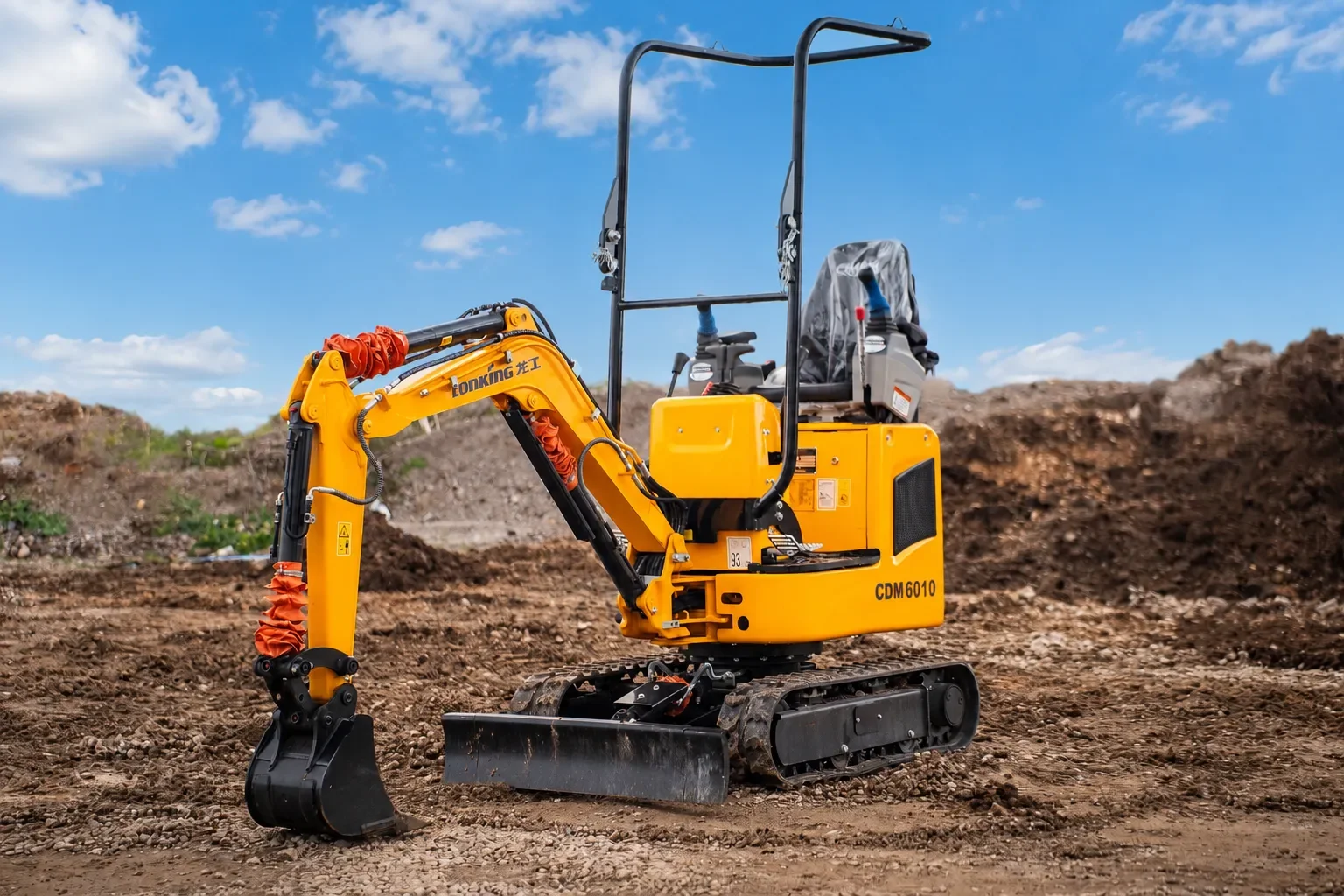
Lonking CDM6010 – Compact Access Model
Lonking CDM6010 is the smallest model in the range and is suitable when access is the main limitation. It is a practical option for private gardens, narrow courtyards, small renovation projects, indoor preparation work and light trenching.
Class: 1-ton class | Engine: Yanmar | Power: 7.2 kW
Choose CDM6010 when compact size, lower ground impact and easier transport matter more than digging force or high daily excavation volume.
Lonking CDM6020 – Narrow Urban Work Model
Lonking CDM6020 is a practical step up when the site is still narrow, but the work requires more capacity than the smallest model can provide. It fits landscaping, small utility repairs, narrow urban trenches and compact jobsites where transport remains important.
Class: 2-ton class | Engine: Yanmar | Power: 13.4 kW
Choose CDM6020 when you need more working ability than a 1-ton class excavator, while keeping the machine relatively easy to transport between jobsites.
Lonking CDM6025 – Compact Urban Work Model
Lonking CDM6025 is suitable for urban work where the machine must operate close to walls, fences, buildings or other obstacles. It is a practical fit for contractors working in residential areas, city repair sites and compact construction zones.
Class: 2.5-ton class | Engine: Yanmar | Power: 14.6 kW
Choose CDM6025 when maneuverability near structures is important, but the job requires more working capacity and stability than a 1–2 ton machine.
Lonking CDM6035 – Daily Contractor Work Model
Lonking CDM6035 is suitable for companies that need one compact excavator for varied daily tasks. It fits drainage, small foundations, landscaping, cable routes, utility repairs and general construction work.
Class: 3.8-ton class | Engine: Kubota | Power: 18.2 kW
Compared with smaller models, CDM6035 offers more stability and working capacity, while still remaining practical for many urban and suburban jobsites.
Lonking CDM6060 – Higher Output Excavation Model
Lonking CDM6060 is the stronger option when the work requires deeper trenches, higher digging force and better daily output. It is suitable for heavier excavation, larger foundations, longer trenching jobs and projects where the machine will remain on site for longer periods.
Class: 6-ton class | Engine: Yanmar | Power: 42.4 kW
Choose CDM6060 when productivity matters more than compact transport and the jobsite has enough access for a larger mini excavator.
Lonking Mini Excavator Comparison Table
| Model | Operating weight | Engine | Power | Suitable for |
|---|---|---|---|---|
| Lonking CDM6010 | 1010 kg | Yanmar | 7.2 kW | Ultra-tight access, gardens, indoor renovation, light trenching |
| Lonking CDM6020 | 2000 kg | Yanmar | 13.4 kW | Narrow urban sites, landscaping, light utility repairs |
| Lonking CDM6025 | 2650 kg | Yanmar | 14.6 kW | Compact urban work near buildings, walls and fences |
| Lonking CDM6035 | 3850 kg | Kubota | 18.2 kW | Daily contractor work, drainage, foundations and utilities |
| Lonking CDM6060 | 6050 kg | Yanmar | 42.4 kW | Deeper trenches, heavier excavation and higher daily output |
Common Applications
Utility Trenches and Infrastructure
Mini excavators are commonly used for water, sewer, cable, drainage and irrigation trenches. For shallow and narrow trenches, CDM6020 may be sufficient, especially when access is restricted. For longer routes, deeper trenches or regular utility work, CDM6025 and CDM6035 are more practical because they provide better stability and working reach. CDM6060 makes sense when the trenching volume is higher or the ground conditions require more digging force.
Landscaping and Private Yards
Landscaping work often requires compact equipment that can move through gates, avoid damaging finished surfaces and work around existing walls, trees, paths and garden structures. Smaller models such as CDM6010 and CDM6020 are suitable when access is limited and ground protection matters. For larger garden reshaping, drainage preparation or retaining wall work, CDM6025 or CDM6035 may provide better productivity while still remaining manageable on private sites.
Small Foundations and Building Extensions
Mini excavators are useful for preparing foundations for garages, extensions, utility buildings and small construction projects. The required model depends on depth, soil type and the amount of material to move. CDM6025 and CDM6035 are practical choices for many small foundation jobs because they offer a balance of stability and compact size. CDM6060 is more suitable when the excavation is deeper, the soil is heavier or the project requires higher output.
Urban Renovation and Demolition Preparation
In renovation and demolition preparation, the machine often works close to existing structures. Tail swing, visibility and precise control are important because the operator may be working near walls, fences, sidewalks or building entrances. CDM6010 and CDM6020 are useful where access is very limited. CDM6025 is a stronger option when the site still requires compact movement but the work is more demanding.
Municipal and Roadside Maintenance
For roadside repairs, drainage cleaning, pavement preparation and municipal maintenance, transport and quick positioning are important. Lighter models are easier to move between short jobs, while mid-size models provide more working capacity when the machine needs to complete several tasks on the same site. When choosing for municipal or maintenance work, consider how often the machine will move, whether it will work near traffic and how much reach is required.
Attachment Work
Mini excavators can be used with attachments such as hydraulic hammers, augers, grading buckets and narrow trench buckets when the machine is properly configured. Attachment choice should be discussed before ordering because hydraulic flow, pressure, attachment weight and machine stability all matter. Smaller machines can handle lighter tools, while heavier models are better suited to more frequent or demanding attachment use.
Frequently Asked Questions
Choose by access width, required digging depth, transport limits and daily workload. A 1–2 ton machine is suitable for very tight spaces and lighter work. A 2.5–3.8 ton machine is more suitable for regular contractor tasks. A 6-ton model is more practical when the work requires deeper trenches, heavier excavation or higher daily output.
CDM6010, CDM6020 and CDM6025 are the first models to compare for narrow urban work. CDM6010 and CDM6020 are suitable when access is very restricted. CDM6025 is more suitable when you need more stability while still working close to buildings, walls or fences.
CDM6025 is more compact and better suited to tighter urban jobsites. CDM6035 is heavier and provides more stability and working capacity, which makes it more suitable for longer workdays, general construction, drainage and utility work.
CDM6060 is suitable when the work requires higher digging force, deeper trenches and better daily productivity than the smaller models can provide. It is more appropriate for larger jobsites, heavier soil conditions and projects where the machine will remain on site longer.
Selected models can work with hydraulic attachments, but compatibility must be confirmed before ordering. Check hydraulic flow, pressure, attachment weight and machine stability before choosing a hammer, auger or other tool.
Transport depends on operating weight, trailer or truck capacity, loading ramps and road requirements. Lighter models are easier to move between several small jobsites, while heavier models may require more transport planning but can complete more work per day.
Measure the narrowest access point, entrance height, turning space, required digging depth, soil type and trailer loading capacity. Also describe the work type, planned attachments and delivery location.
Related Equipment
Need Help Choosing a Mini Excavator?
Send the access width, required digging depth, work type, delivery location and any planned attachments. BAUTRAX can help compare the available Lonking CDM models and prepare a quote based on your jobsite requirements